Two homes on the same street in South Pinellas can carry the same square footage, the same dock length, the same "waterfront" tag on the listing sheet, and sell forty or more percent apart. The difference usually isn't the kitchen or the roof age. It's a fixed bridge somewhere between the dock and open water, and whether a boat taller than a kayak can get under it.
Realtors and boaters call the unrestricted version "sailboat water." It shows up in listing copy for a reason. A recent Snell Isle listing on Brightwaters Boulevard NE described the property as sitting on "deep, protected sailboat water," and that phrase is doing real pricing work, not just flourish. It tells a buyer that nothing between this dock and Tampa Bay will cap the size of the boat they can own.
What "Sailboat Water" Actually Separates
Waterfront in South Pinellas breaks into two structurally different tiers, and the split has nothing to do with view, lot size, or how recently the seawall was poured.
On one side sit addresses with direct, unobstructed water access. Snell Isle carries several of these pockets: Brightwaters Boulevard, Smacks Bayou, Coffee Pot Riviera, and Eden Isle all connect to Tampa Bay without a low fixed span in the way. Other South Pinellas sailboat-water pockets include parts of Venetian Isles, Coquina Key, Bahia Shores, and Pass-a-Grille, all with a route to open water that doesn't require checking a tide chart first.
On the other side sit homes on canals or bayous where a fixed bridge sits between the dock and the bay. The bridge doesn't stop a pontoon or a center console. It stops anything with a mast, a tall T-top, or a flybridge. Boaters navigating the Placido Bayou and Smacks Bayou area near 33703 have described one span informally as tight, roughly nine feet of clearance and tide-dependent, meaning a boat that clears it at low tide can scrape it at high tide. Compare that to the Gandy fixed spans, which clear around 43 feet, or the Maximo Bridge on Pinellas, closer to 65 feet. A house behind a nine-foot bridge and a house with Gandy-level clearance are not competing in the same buyer pool, even if both list as "waterfront."
Why a Boater Will Pay More for the Same Dock
The buyer pool for sailboat water skews toward people who already own, or plan to own, a vessel that a low bridge would lock in place. That buyer isn't shopping on price per square foot. They're shopping on whether the home lets them use the asset they already have, or the one they're about to buy. A bridge-restricted canal home can be a perfectly good waterfront property for someone with a bay boat or a kayak. It's a non-starter for someone who sails or runs a boat with real air draft, and that buyer will pay a real premium to avoid the problem entirely.
This is the part a median price can't show. Two homes priced within a few thousand dollars of each other on paper can be answering two different questions for two different buyers, and the bridge is the variable doing the sorting.
The Second Hidden Number: What's Under the Waterline
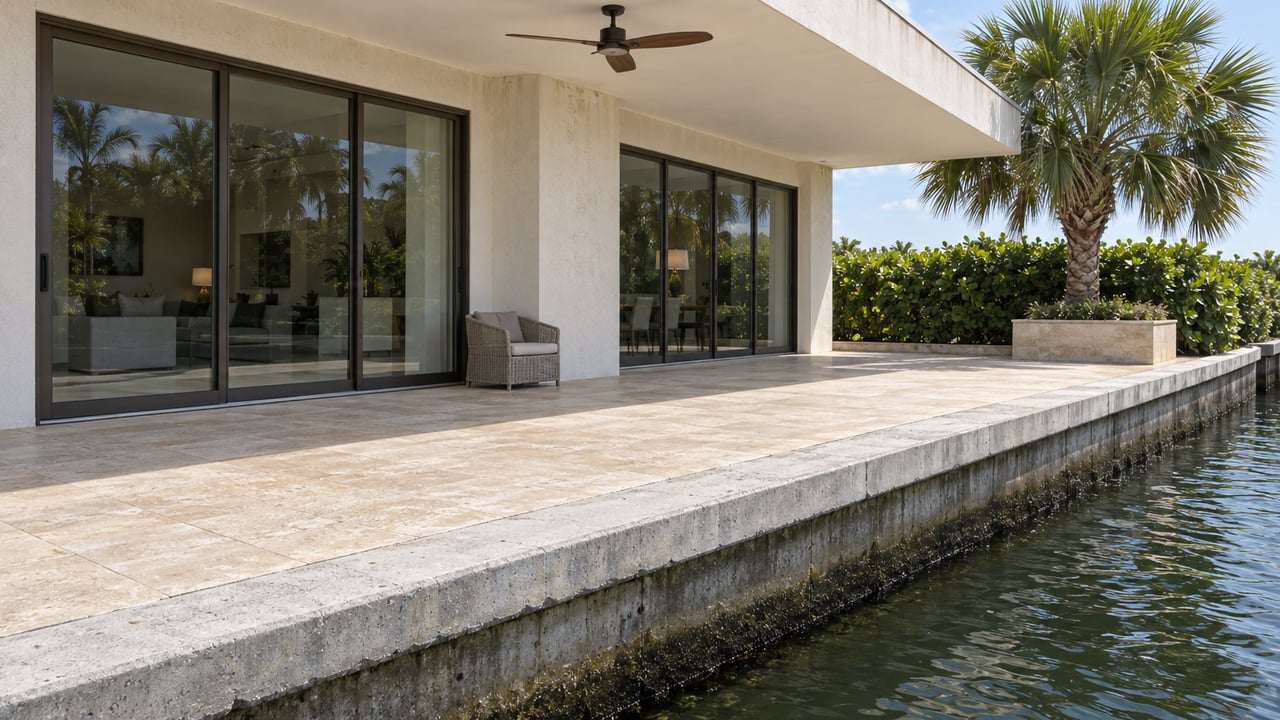
Bridge clearance decides who can dock at your house. Seawall condition decides what you'll spend keeping the dock there at all, and it's an entirely separate cost from the bridge question.
Most seawalls around the Pinellas peninsula were built decades ago, and a meaningful share are at or past a typical design life. Repair or full replacement in Pinellas County commonly runs in the range of $300 to $800 per linear foot, depending on whether the work is a cosmetic cap repair or a structural rebuild with new tiebacks and panels. Engineering review and permit fees typically add another $2,000 to $5,000 on top of construction cost. County permit review for this kind of marine work commonly takes six to ten weeks once paperwork is complete, which matters if a buyer is hoping to resolve a seawall issue before closing rather than after.
Pinellas County's code also puts a real constraint on how a failing wall gets fixed. A replacement seawall can be placed no more than one foot in front of the face of the existing wall, which limits how much a homeowner can simply build outward to solve an eroding lot line. None of this is exotic. It's the standard path for waterfront work in this county, and the county's permitting guide lays out the document requirements before a contractor can even schedule the first inspection.
A seawall problem discovered during an inspection period doesn't automatically kill a sale. But it does mean a buyer who assumed "waterfront" meant a finished, worry-free asset is now pricing an unplanned five or six figure line item into the deal, on top of whatever the bridge situation already told them about resale.
Before You Write the Offer
A few checks take less time than a single showing and can save a buyer from discovering either problem after the inspection period has closed:
- Pull up the specific address on a nautical chart or ask a local boater what bridge, if any, sits between that dock and open water, and what its posted clearance is at mean high water.
- Ask the listing agent directly whether the property is marketed as sailboat water, and get that confirmed in writing rather than assumed from the photos.
- Request any existing dock permits and confirm whether the current structure is grandfathered or would need a fresh permit to replace.
- Bring in a marine contractor or engineer, not just the general home inspector, to look at the seawall above and below the waterline before the inspection period runs out.
- Get two independent quotes if repair or replacement looks likely, since a first estimate from a single contractor can undersell the real scope of the work.
Buyers weighing a South Pinellas waterfront purchase against other coastal options can start with our broader guide to buying waterfront in South Pinellas for the fuller checklist, then use this bridge and seawall distinction to narrow the short list. Anyone comparing South Pinellas against other parts of the bay can also review the full South Pinellas neighborhood guide for context on which pockets tend to carry sailboat access.
Does sailboat water always cost more than a bridge-restricted address?
It tends to, because the buyer pool willing to pay for unrestricted access is bidding against itself for a smaller inventory of homes. A bridge-restricted canal home can still be excellent value for a buyer who has no interest in a boat taller than a bay boat.
Can I check bridge clearance without owning a boat?
Yes. Local boaters, marine surveyors, and even a call to the harbor master or a review of NOAA nautical charts for the area can confirm posted clearance for a specific bridge before an offer goes in.
If the seawall is bad, who pays?
Who pays gets negotiated between the buyer and seller.
If you're comparing a "waterfront" listing against what it actually delivers once you check the bridge and the seawall, that's exactly the kind of read I do before a client ever writes an offer. Reach out through Michele Ranjbar and we'll walk the specific address together before you fall for the photos.
This article is general information, not legal, tax or financial advice. Consult a qualified professional about your situation.