Dreaming about a waterfront home in South Pinellas? The view can be unforgettable, but the questions you ask before you buy matter just as much as the sunset. If you want the lifestyle without costly surprises, it helps to understand flood risk, insurance, permits, shoreline rules, and property condition before you fall in love with a house. Let’s dive in.
Why South Pinellas waterfront buying is different
Buying near the water in South Pinellas is not the same as buying an inland home. Pinellas County identifies coastal planning, sea level rise, and natural disasters as built-in concerns for this market. That means a beautiful location can also come with extra layers of ownership planning.
The shoreline itself also has a long management history. Pinellas County notes that much of the developed shoreline had already eroded to seawalls by the 1960s, and federal shore-protection projects were later started along the developed Gulf shoreline. For you as a buyer, that means waterfront ownership can involve ongoing shoreline, erosion, and maintenance considerations.
Check flood risk the right way
One of the biggest mistakes buyers make is assuming one map tells the whole story. In Pinellas County, flood zones, evacuation zones, and storm surge are different hazards, and the county says you should check each one separately. A home can look manageable on one map and still carry meaningful risk on another.
Pinellas County also says everyone in the county is in a flood zone. High-risk Special Flood Hazard Areas include Zones A and V, and wave action is expected in V and Coastal A zones. If you are comparing homes, these details can affect insurance, future repairs, and your comfort level with risk.
Ask for these flood details early
Before you get too far into negotiations, confirm:
- The FEMA flood zone
- The county flood-hazard area
- The storm-surge depth
- The evacuation zone
- Whether wave action is expected at the site
This is especially important for out-of-state and seasonal buyers who may not be familiar with local coastal mapping. A waterfront home can still be the right fit, but you want a clear picture before you commit.
Understand flood insurance before you budget
Flood insurance is a major part of waterfront homeownership in South Pinellas. Pinellas County says that for federally backed or federally secured loans, flood insurance is required when a building is in a Special Flood Hazard Area. Lenders are responsible for determining whether the building falls in that zone.
Even if a property is not in a FEMA flood zone, Pinellas County says flood insurance is still recommended when the home is exposed to storm surge. That is an important point because many buyers assume they are safe if they are outside a high-risk FEMA designation. In reality, flood exposure and insurance planning may still deserve close attention.
Most standard homeowners policies do not cover flood damage. Florida’s Chief Financial Officer says flood coverage may be purchased through the National Flood Insurance Program or private insurers, either as a stand-alone policy or by endorsement. There is also generally a 30-day waiting period before a new flood policy takes effect, so this is not something to leave until the last minute.
Know the NFIP limits
If you are pricing your total monthly housing cost, coverage limits matter too. Pinellas County says NFIP coverage for a single-family residential structure provides up to:
- $250,000 for the building
- $100,000 for contents
Depending on the home you are considering, those limits may or may not match your needs. That is one reason it helps to review insurance options early in the process.
Watch for CBRA restrictions
For some barrier-island properties, there is another issue to check. Pinellas County says a parcel in a Coastal Barrier Resources System unit may be ineligible for federal flood insurance and other federal assistance. In some cases, even existing NFIP coverage may not renew after substantial improvement or damage.
That makes this a critical question for serious waterfront buyers. If a home is on or near the barrier islands, ask about CBRA status before moving forward.
Review inspections and condition carefully
Waterfront homes often face more wear from salt, wind, and moisture than inland properties. That does not mean you should avoid them, but it does mean condition matters even more. Insurance carriers may look closely at systems and maintenance when deciding whether to offer or renew coverage.
Florida’s CFO says a four-point inspection is commonly required when issuing or renewing a policy on an older home. This inspection focuses on four major areas:
- Roof
- Plumbing
- Electrical system
- HVAC
Citizens says it requires a four-point inspection for certain applications on properties more than 20 years old. If you are buying an older waterfront home, it is smart to expect this issue to come up.
Wind mitigation can affect costs
In coastal Pinellas, a wind mitigation inspection can be just as important. Citizens says documenting qualifying wind-resistance features may help homeowners qualify for insurance discounts. The inspection must be completed by an authorized Florida-qualified professional using the Uniform Mitigation Verification Inspection Form.
This is one of those details that can directly affect your ownership costs. Features that help a home resist wind may improve both insurability and premium pricing.
Check permit history before closing
Permit history is a big deal with waterfront property. Pinellas County requires permits for new building, additions, remodeling, demolition, and other work over $500 or work requiring inspection. For waterfront features, the county says docks, marinas, seawalls, riprap, tie poles, and all dredging or filling in county waters require Water and Navigation permits.
That means you should not just evaluate the house itself. You also want to verify whether the dock, seawall, shoreline work, or storm repairs were properly permitted. Missing permits can create problems during resale, insurance review, or future renovation planning.
Documents worth requesting
Ask the seller for:
- Prior permit records
- Permits for dock or seawall work
- Records for post-storm repairs
- Flood policy declarations
- An elevation certificate, if available
Pinellas County provides permit-history lookup tools through its Access Portal, and the county also notes that after-the-fact permits may be required for unpermitted storm-damage repairs. Failing to obtain required permits can lead to fines and may even affect the county’s flood-insurance discount.
Learn the 49% substantial damage rule
If a home in a flood hazard area has been damaged, there is another rule you need to understand. Pinellas County says substantial damage and substantial improvement rules apply, using a 49% threshold that can affect whether the structure must be elevated or otherwise brought into current floodplain standards.
This can have a major impact on renovation plans. The county also says repair-cost calculations include labor, materials, demolition, overhead, and even owner-performed work at market rates. If you are buying a fixer, or if the property has had storm damage, this is a question to verify early.
Look beyond the seawall
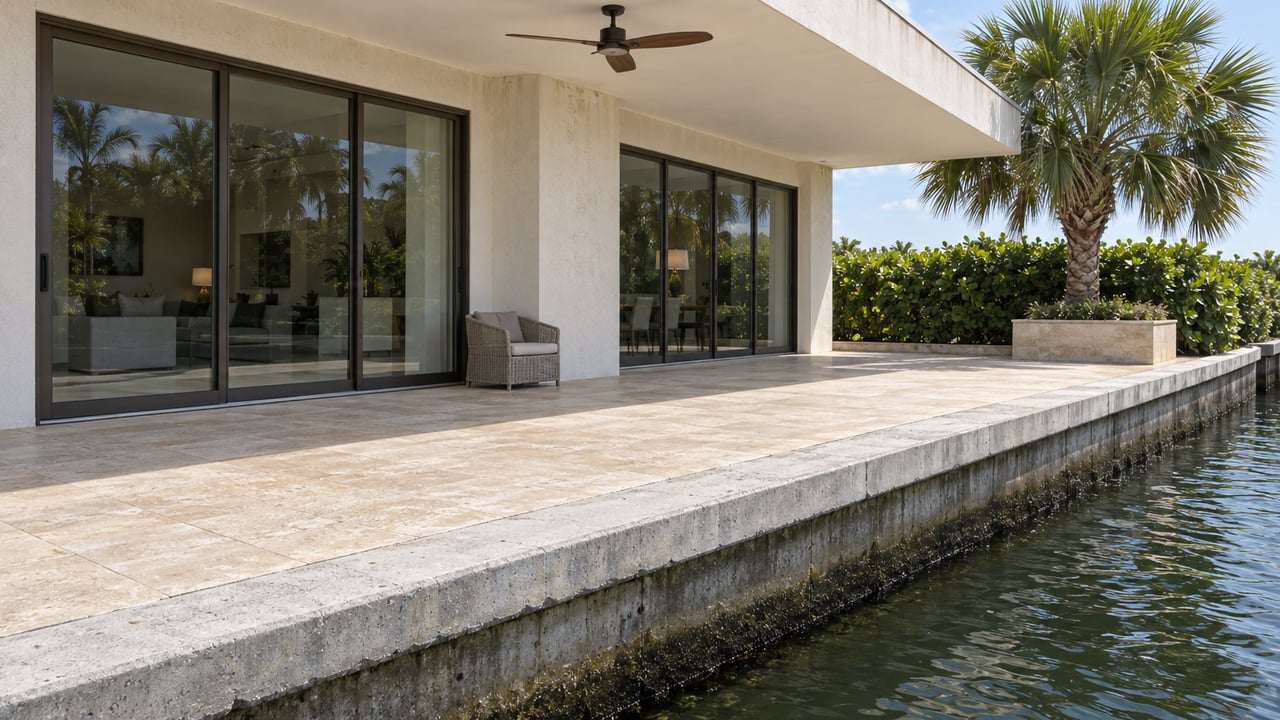
Many buyers focus on the seawall and stop there. In South Pinellas, you should understand whether the property has a seawall, a living shoreline, or limits on future hardening. These details can shape both upkeep and long-term options.
Pinellas County says living shorelines use oyster reefs, marsh grasses, and mangroves to reduce erosion and wave energy, and they may extend the life of an existing seawall. The county’s coastal-management plan also says shoreline hardening should be permitted only when other measures are insufficient. In simple terms, not every waterfront edge can be treated the same way.
Ask shoreline questions specific to the site
A practical waterfront review should include:
- What type of shoreline protection exists now
- Whether the seawall has known issues
- Whether living shoreline features are present
- Whether future shoreline work may be limited
- Whether any waterfront structures required special permits
These are site-specific questions, and they can affect both maintenance planning and future costs.
Coastal landscaping works differently
If you are picturing a lush yard by the water, keep in mind that coastal planting has its own rules. UF/IFAS says the most important factor for homes within one-eighth of a mile of the coast is choosing salt-tolerant plants. Salty soil and sea spray can affect what will actually thrive.
That may sound like a small detail, but it can influence upkeep, replacement costs, and how quickly landscaping declines after a move-in. A yard that looks polished during a showing may need a different long-term plan than an inland property.
Beachfront buyers should check special boundaries
If you are considering Gulf-front or beach-adjacent property, ask about the Coastal Construction Control Line, erosion-control lines, and beach-nourishment easements. Pinellas County says the Coastal Construction Control Line is the landward limit of state authority for regulating construction. That can affect what changes are possible on a given parcel.
The county also notes that some beach properties may require easements for nourishment projects, and that beach property seaward of the erosion-control line is state land. These are not small technicalities. They can directly affect your rights, responsibilities, and future project plans.
A smart waterfront buying checklist
Before you buy a waterfront home in South Pinellas, try to verify these items as early as possible:
- Flood zone, storm surge, and evacuation zone
- Flood insurance requirements and timing
- CBRA status, if applicable
- Four-point and wind mitigation inspection needs
- Permit history for the house and waterfront structures
- Prior storm repairs and whether they were permitted
- Elevation certificate availability
- Substantial damage or substantial improvement issues
- Shoreline protection type and condition
- CCCL, erosion-control line, or easement issues for beach-area properties
The goal is not to make waterfront ownership feel overwhelming. It is to help you buy with clear eyes and fewer surprises.
A waterfront purchase can be one of the most rewarding moves you make in Pinellas County, especially when you understand the property beyond the photos and the view. If you want local guidance that is responsive, practical, and tailored to your goals, connect with Michele Ranjbar to start your search with confidence.
FAQs
What should you check first before buying a waterfront home in South Pinellas?
- Start by checking the FEMA flood zone, county flood-hazard area, storm-surge depth, and evacuation zone, since Pinellas County says these are separate layers of risk.
Does every South Pinellas waterfront home require flood insurance?
- Not every home will have the same requirement, but Pinellas County says federally backed or federally secured loans require flood insurance in Special Flood Hazard Areas, and flood coverage may still be recommended when a property is exposed to storm surge.
What is a four-point inspection for a South Pinellas waterfront home?
- A four-point inspection reviews the roof, plumbing, electrical system, and HVAC, and Florida’s CFO says it is commonly required for insurance on older homes.
Why does permit history matter for South Pinellas waterfront property?
- Permit history matters because Pinellas County requires permits for many types of construction and for waterfront features such as docks and seawalls, and unpermitted work can affect resale, insurance, repairs, and future improvements.
What is the 49% rule for flood-hazard homes in Pinellas County?
- Pinellas County says substantial damage and substantial improvement rules use a 49% threshold that can trigger requirements to elevate or bring a structure into current floodplain standards.
What special shoreline issues affect waterfront homes in South Pinellas?
- Shoreline issues can include seawall condition, living shoreline features, erosion concerns, limits on future hardening, and permits for waterfront structures or shoreline work.
What should beach-adjacent buyers in Pinellas County ask about?
- Beach-adjacent buyers should ask whether the property is affected by the Coastal Construction Control Line, erosion-control lines, or beach-nourishment easements, since these can affect construction and property rights.