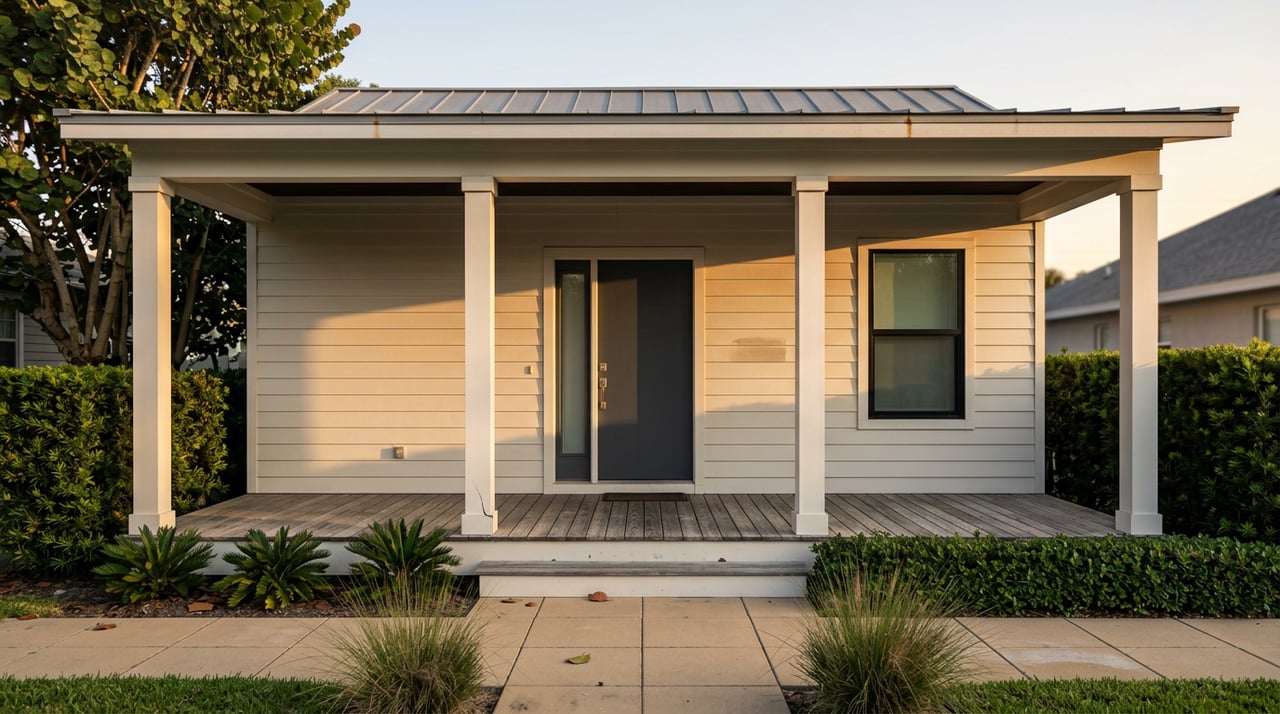
A buyer looking at a bungalow near John's Pass on Treasure Island assumes the deal is simple. The city is built on tourism. Boats leave for sunset cruises two blocks away. Vacation rental signs line the corridor. Surely a house here can run nightly on Airbnb.
Then the zoning search comes back. The parcel sits in RU-75, the city's single-family district, and Treasure Island's Community Development Department says the city caps RU-75 properties at two changes of occupancy a year. Two guest turnovers. Total. For a house the buyer planned to book forty or fifty times a season, that number changes the entire pro forma before the inspection is even scheduled.
This is the part of South Pinellas rental investing that doesn't show up on a listing sheet or a tourism brochure. The city a property sits in tells you almost nothing about what you can legally do with it. The zoning district does, and in some cases the specific parcel does. Two houses three blocks apart, both inside the same city limit, can run two completely different rental businesses.
Same City, Two Different Rental Businesses
Treasure Island is the clearest example because its code doesn't just restrict short-term rentals in certain zones, it counts them. The allowed number depends entirely on the zoning district.
| Zoning District | What It Covers | Occupancy Changes Allowed |
|---|---|---|
| RU-75 | Single-family residential | 2 per 12 months |
| RM-15 | Multi-family residential | 6 per 12 months |
| CG, RFM-30, RFH-50, PR-MU Core, PR-MU Gulf Boulevard | Commercial and mixed-use corridors | No cap |
That last column is the whole story. A property in one of those mixed-use or commercial zones can turn over guests every week if the market supports it. A single-family lot two streets inland is functionally limited to occasional personal use dressed up as a rental.
This isn't a theoretical distinction. In 2019, Beach Beacon reported that homeowners in Treasure Island's RM-15 district sued the city after code enforcement cited their house as an unpermitted tourist dwelling, arguing the ordinance's language around occupancy changes was too vague to enforce. At the time, the RM-15 cap was five turnovers a year rather than the six allowed today, which tells you the number itself has moved. What hasn't moved is the underlying structure: the city treats occupancy count as the regulatory lever.
For a buyer, the lesson is that "Treasure Island" is not a rental market. RU-75, RM-15, and the commercial-zoned parcels are three separate markets wearing the same city name.
St. Petersburg's Rental Rules
St. Petersburg reads as the opposite kind of market. It's an urban core, not a beach town, so most buyers don't think of it as short-term rental territory at all. But BNBCalc notes that the city allows more flexibility than its reputation suggests, within a specific number: three.
Under the city's current rule, a residential property can be rented for less than 30 days up to three times in any rolling 365-day period without being classified as a transient accommodation. Push past that and the property needs to sit in a district zoned for hotel or motel use, or hold an approved Resort Facilities Overlay designation, and as of the city's own count, no property in St. Petersburg currently holds that overlay.
St. Petersburg adopted its transient accommodation rule in 2001, a decade before Florida's 2011 state law began preempting cities from regulating the frequency or duration of short-term rentals.
The takeaway for a buyer comparing cities isn't that St. Petersburg is loose or strict. It's that the three-stay allowance exists because of a paperwork trail from 2001, not because of anything intuitive about the city's character.
Gulfport Runs the Default Backward
Gulfport flips the logic entirely. Where St. Petersburg and Treasure Island start from "allowed, with limits," Gulfport's zoning code starts from "not allowed, unless specifically listed." The City of Gulfport says short-term rentals are not permitted citywide by default, and a zoning district must explicitly name transient accommodations as a permitted or conditional use before an owner can operate one there. According to Pinellas Realtor, outside those named districts, the only lawful path is a minimum one-month rental, and no more than three of those a year.
This "listed uses only" structure means a buyer can't scan Gulfport's zoning map for restricted zones. They have to look for districts that affirmatively allow the use, which is a smaller and less obvious list than checking for prohibitions. It also means Gulfport, despite lacking the beach-town reputation of St. Pete Beach or Treasure Island, can end up functionally more restrictive for a typical residential buyer chasing nightly income.
The Layer the Zoning Map Doesn't Show
Everything above describes what a city allows. None of it describes what a condo association or HOA allows, and that distinction matters because, according to Houfy's short-term rental laws guide, Florida's short-term rental preemption law does not reach private governing documents. A city can zone a parcel for unrestricted nightly rentals, and the building's declaration of condominium can still prohibit rentals outright.
This is the friction that catches remote buyers off guard most often, because it requires reading a document that isn't part of the standard listing package. A property in one of Treasure Island's no-cap commercial zones, for example, still answers to whatever the building's association has adopted, and that document can be stricter than the city code by a wide margin. Before making an offer on any property where rental income is part of the plan, the governing documents deserve the same scrutiny as the zoning designation. Our guide to condo and HOA basics in South Pinellas walks through how to request and read those documents before you're under contract.
What It Costs to Operate Legally
Assuming a property clears both the zoning and HOA hurdles, two more layers apply everywhere in South Pinellas regardless of city.
First, Minut explains that Florida's Department of Business and Professional Regulation requires a vacation rental license for any property rented for fewer than 30 days more than three times a year. That threshold is separate from and can be stricter than the local zoning cap in cities like St. Petersburg, where the local rule already limits owners to three stays before triggering the same classification the state uses for licensing.
Second, the tax stack applies on top of licensing. According to STR Law Map, Florida's state sales tax is 6 percent on transient rentals of six months or less, and Pinellas County layers its own tourist development tax on top, which can run up to 6 percent more depending on the local option rate in effect. An owner should plan for taxes before management fees, cleaning, or anything else.
None of that changes based on which side of a zoning line the property sits on. What changes is whether there's any legal revenue to tax in the first place.
Before You Write the Offer
- Pull the zoning designation for the specific parcel, not the neighborhood or city name. Treasure Island's own example shows why: RU-75 and CG sit blocks apart with opposite rules.
- Ask the seller or listing agent for the complete declaration of condominium, bylaws, and rules and regulations if the property is in a building or association. Zoning is only half the answer.
- Check whether the city's short-term rental ordinance predates June 1, 2011.
- Confirm the DBPR licensing threshold applies to your plan. Even a modest rental schedule, four one-week stays a year, for example, crosses the three-stays-per-year line and requires state licensing.
A Few Quick Questions
Does St. Pete Beach follow the same three-stay rule as St. Petersburg? No. The Local Lens reported a legal challenge over how St. Pete Beach's original ordinance was adopted. Treat it as its own jurisdiction, not an extension of St. Petersburg's rule.
Can an HOA restrict rentals in a Treasure Island district with no city-imposed cap? Yes. The city's occupancy limits apply to what the zoning code permits. A condo association's governing documents operate independently and can be more restrictive, including outright bans, regardless of the zoning designation.
What happens if a property exceeds its allowed occupancy changes? Code compliance processes vary by city.
Zoning research like this is exactly the kind of groundwork that determines whether a South Pinellas purchase performs the way an investor expects. If you're evaluating a specific address for rental potential, or want a shortlist of parcels that actually clear the zoning and association hurdles before you spend time on due diligence, Michele Ranjbar can help you verify what a property is zoned for and what its governing documents allow before you write an offer. Reach out through the buyer resources page to start the conversation.
This article is general information, not legal, tax or financial advice. Consult a qualified professional about your situation.